| ..tools of the farmer. This is an 'A'-frame backpack called a 'chigae'. The container, an 'ogang' was used to carry human waste. | 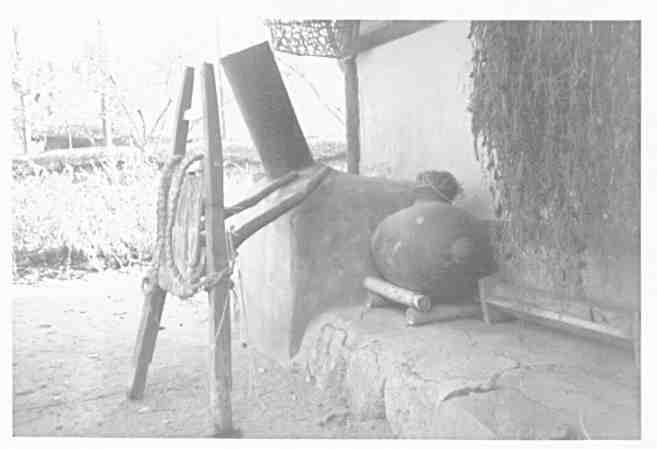
|
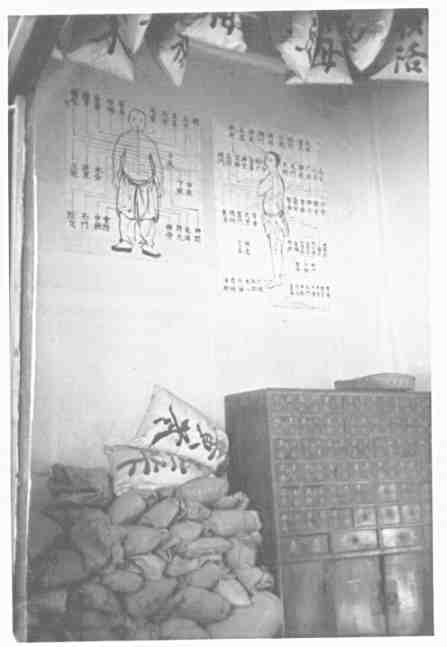 |
..the 'yak-bang', a traditional Korean doctor's storage room for herbs. |
| A pagoda on a cliff overlooking the north branch of the Han River. It's at Shilluksa in Kyonggi Province. | 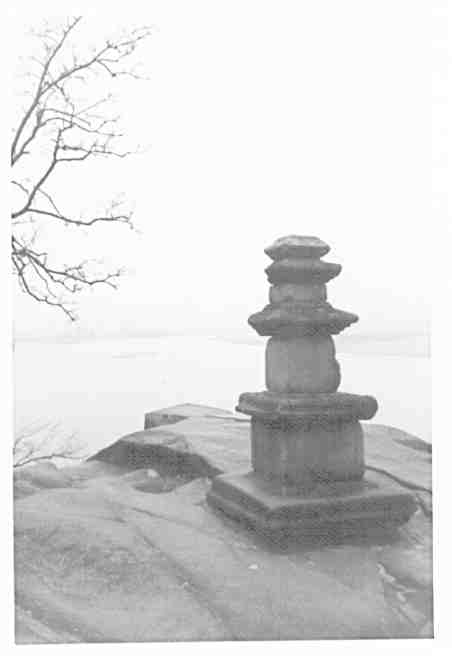
|
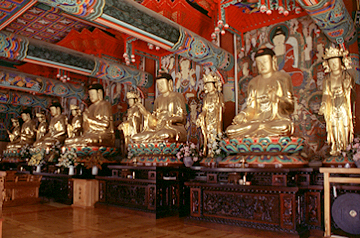 |
The eleven golden figures on the altar of a hall in Kumsansa temple in North Cholla Province. |
| This is the Miruk-saji Pagoda, a pagoda that is the one of the few remnants of what was probably a rather large Buddhist temple of the Paekche era, just outside of Kumma in North Cholla Province. The pagoda and temple were constructed around 600 and used until the 1700s. Miruk-tap was poorly reconstructed in 1915 under the auspices of the Japanese colonial government, and has since had additional repair work done in 1965 and 1980. Looking more like a building than a pagoda, it is reinforced on one side with concrete. | 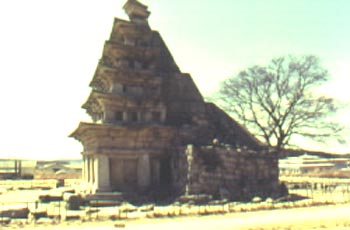
|
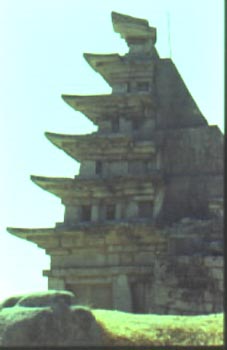 |
..the number of extant stone pieces made a total reconstruction impossible. Its six tiers rise to 14 meters, but it was likely constructed with 7 to 9 tiers. |
| ..this is what Miruk-tap really looked like when it was constructed. This life-size pagoda was built just to east of the original at the temple site. | 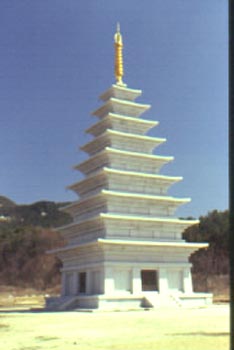
|
| A Buddha figure standing in a field near Kumma in North Cholla. One of the 'twin Buddhas' that face each other about 100 meters away, its origin is a mystery. | 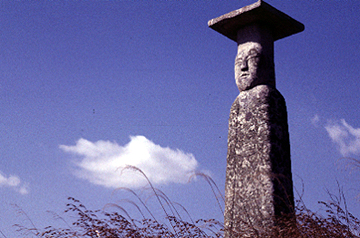
|
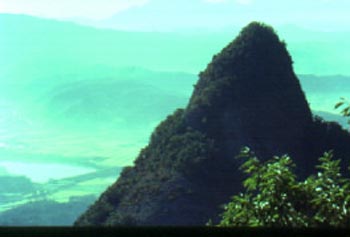 |
The west peak of the double-mountain known as Maisan in North Cholla. |
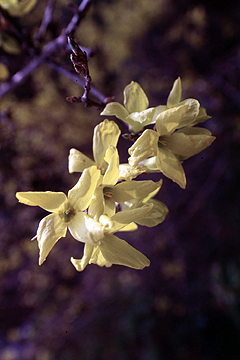 |
Here are some wildflowers that are native to Korea. This one is called 'Kaenari'. |
| 'Chindaelae' can be seen growing in the mountains in the spring. | 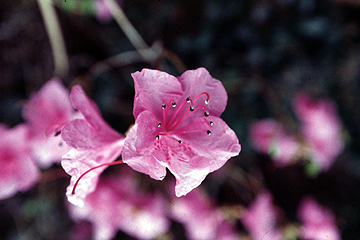
|
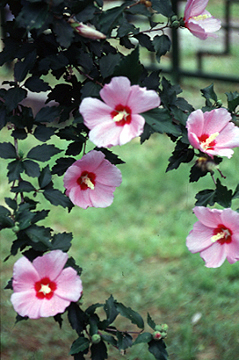 |
The Korean national flower, the Mugunghwa (Rose of Sharon). |
| The 'Pukgot' is from a flowering tree, similar to peach blossoms. | 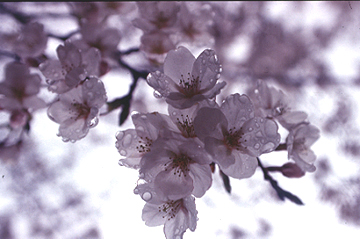
|
| ..here these trees line the side of a road near Hadong. | 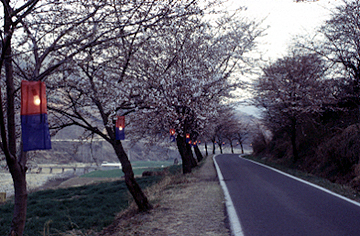
|
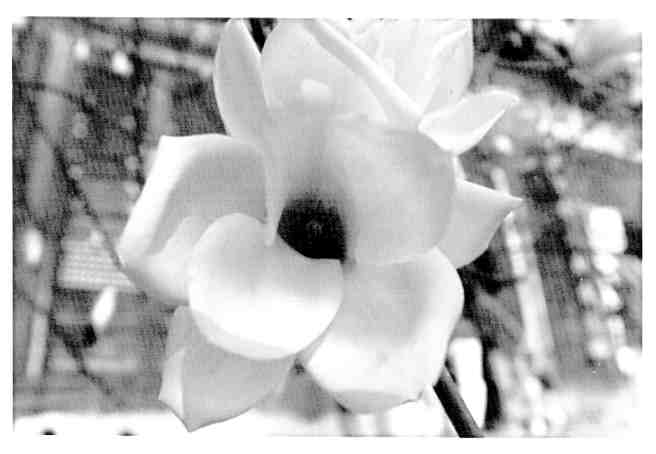 |
This all-white flower is called 'Mongnyun'. It is in bloom for a short time, then quickly litters the ground with its pedals. |